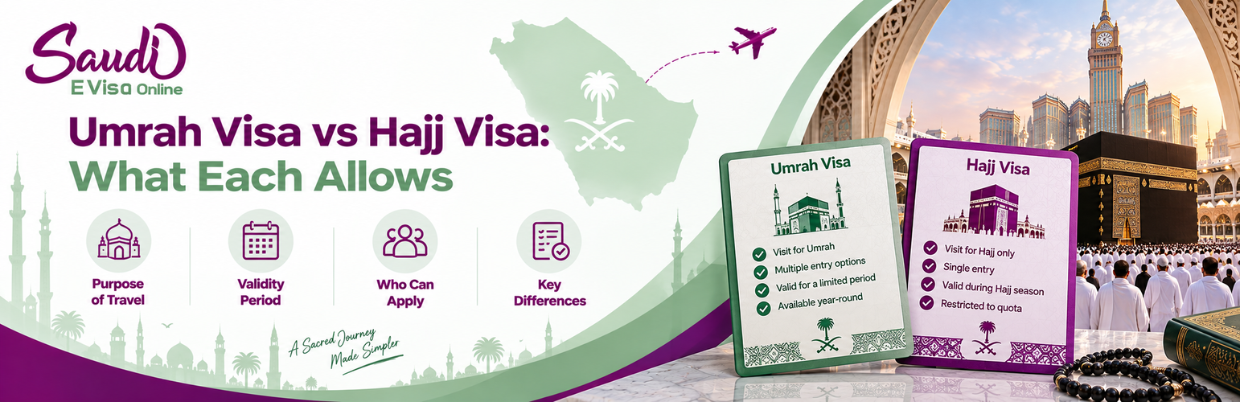
Saudi Arabia treats Hajj and Umrah differently. Hajj requires the specific Hajj authorization and seasonal process, while Umrah can be available through approved visa routes outside the Hajj season.
Mixing them up is one of the costliest mistakes a pilgrim can make. The wrong visa can mean a refused boarding, a fine, or a ban from returning. This guide explains the umrah visa vs hajj visa question clearly: what each one allows, how each is issued, when the seasonal restrictions apply, and which route suits your plans.
Umrah Visa vs Hajj Visa at a Glance
| Hajj | Umrah |
|---|
| Requires Hajj authorization/permit | Can be performed with an eligible Umrah visa or other permitted visa |
| Managed through official Hajj channels | Available through Nusuk and approved Umrah service providers |
| Subject to Hajj-season dates and quotas | Generally available throughout the year outside Hajj restrictions |
| Tourist visa cannot be used for Hajj | Eligible Saudi tourist visa holders can perform Umrah, subject to current rules |
| We do not process Hajj permits/packages | We can assist with eligible Umrah visa processing |
The pattern is simple. Hajj is a once-a-year, quota-controlled pilgrimage with its own visa. Umrah is flexible and can be done for much of the year, but it still needs the correct visa and a permit.
Umrah Visa vs Hajj Visa: What Is the Difference?
Hajj takes place on fixed days in the month of Dhul Hijjah, and it draws millions of pilgrims to Makkah and the holy sites of Mina, Arafat and Muzdalifah. Umrah is a shorter pilgrimage to Makkah that Muslims can perform at almost any time of year. Because Hajj concentrates so many people in a small area, Saudi Arabia limits entry through quotas and permits. Umrah is easier to arrange, but the authorities still control it through visas and appointments on the Nusuk platform. That is why the umrah visa vs hajj visa distinction matters so much in practice.
Hajj: Nusuk Only, What We Do Not Do
Hajj is a separate pilgrimage from Umrah and requires the appropriate Hajj authorization. Travellers should use the official Nusuk platform and authorized Hajj channels for Hajj arrangements.
We do not process Hajj visas, Hajj permits, or Hajj packages. Do not attempt to use a tourist or Umrah visa as a substitute for the required Hajj authorization.
Saudi Arabia allocates Hajj places by country quota, roughly in proportion to each country's Muslim population. Pilgrims from countries served by Nusuk Hajj can register and choose a package directly. Pilgrims from other countries apply through their national Hajj mission or a licensed operator, and approved names are then entered into the Saudi system. Registering does not guarantee a place, and demand often exceeds supply.
A Hajj visa is purpose-specific. It covers the pilgrimage season and is not a general visit visa, so it cannot be stretched into a tourist trip.
Umrah: eVisa or Operator
Umrah has more visa options. Eligible travellers may be able to perform Umrah using a Saudi tourist eVisa, while dedicated Umrah visas can be obtained through Nusuk Umrah or approved Umrah service providers.
The appropriate route depends on nationality, visa eligibility, and the current pilgrimage-season rules. Regardless of the visa type, visitors must follow the required Umrah authorization and permit procedures.
The tourist eVisa is valid for one year, allows multiple entries and permits stays of up to 90 days. Nusuk Umrah, launched in 2025, lets pilgrims outside the Kingdom request Umrah visas and book services online without a separate intermediary. Check our guide to the Umrah visa online route, and confirm whether your passport qualifies on the list of Saudi eVisa eligible countries.
Even with a valid visa, Umrah needs a permit. Book your Umrah and Ziyarah appointments through the Nusuk platform before you travel, choose slots that fit your flights, and save every confirmation. Only Muslims may perform Umrah, and availability can tighten around Ramadan and school holidays, so book early and keep a little flexibility in your plans.
The Hajj-Season Blackout on Tourist Visas
Saudi Arabia restricts access to Makkah during the Hajj season. A tourist visa does not allow a traveller to perform Hajj, and additional seasonal restrictions can prevent tourist-visa holders from entering or remaining in Makkah during the specified Hajj period.
Travellers planning a Saudi trip around Hajj should check the current seasonal dates and restrictions before booking flights or accommodation.
The restricted period runs from 1 Dhul Qi'dah to 14 Dhul Hijjah. In 2026 that meant roughly 18 April to 31 May. During that window Umrah permits on Nusuk were suspended, Umrah visa holders had to leave the Kingdom by 18 April, and holders of visit visas could not enter or stay in Makkah. Residents also needed a Makkah entry permit from mid-April. The dates shift about 11 days earlier each year and are confirmed by the Saudi authorities, so treat any future date as an estimate until it is announced.
Penalties for Using the Wrong Visa
Enforcement is strict. The Ministry of Interior has announced fines of up to SAR 20,000 for anyone caught performing or attempting Hajj without a permit, including visit-visa holders who enter or stay in Makkah and the holy sites during the restricted period. Residents and overstayers can also be deported and banned for ten years. People who arrange visit visas for violators, transport them or shelter them face fines of up to SAR 100,000, multiplied by the number of people involved, and vehicles can be confiscated. Amounts have changed between seasons, so verify the current figures.
How to Apply for an Umrah Visa
- Decide the route: a tourist eVisa if you are eligible, or Nusuk Umrah or an approved provider.
- Check that your passport is valid for at least six months from your entry date.
- Prepare a recent photo and your travel and accommodation details.
- Submit the application on the official portal or through your provider, and pay the fee.
- Book your Umrah and Ziyarah slots through Nusuk before you travel.
- Carry your visa, permit and bookings when you fly.
Fees depend on the route, so see our page on the Saudi visa cost for a breakdown, and read the Saudi eVisa requirements before you start.
How to Apply for Hajj
Start with your own country's arrangements. Find out whether your country is served by Nusuk Hajj or manages pilgrims through a national Hajj authority, then register when the season opens. Choose an approved package, pay through the official channel, and complete the required health steps. Only use operators licensed by the Ministry of Hajj and Umrah, and be wary of anyone offering a "guaranteed" place outside the official systems. Applications usually open months before the season, so plan early.
Documents and Health Requirements
- A passport with at least six months of validity from your entry date
- A recent passport-style photo that meets the rules
- Confirmed accommodation and return travel
- For Hajj, an approved package and permit issued through the official system
- Vaccination and medical fitness documents, which are commonly required for Hajj
Health rules change, so confirm the current requirements with the Ministry of Hajj and Umrah or your national authority. If you plan to extend a stay after Umrah, read our note on Saudi eVisa validity and extension.
Umrah Visa vs Hajj Visa: Which Should You Choose?
| Your plan | Route |
|---|
| Umrah outside the Hajj season | Tourist eVisa or Nusuk Umrah |
| Umrah plus sightseeing | Tourist eVisa, following permit rules |
| Hajj | Official Hajj channel only |
| A trip that overlaps the Hajj period | Avoid Makkah, or use a valid Hajj visa |
Not sure which category fits? Our guide on which Saudi visa do I need compares every option.
Cost, Validity and Length of Stay
The umrah visa vs hajj visa comparison also differs on money and time. The tourist eVisa carries a SAR 300 visa fee, with mandatory insurance and VAT added at checkout, and it allows stays of up to 90 days over a one-year validity. Hajj works differently. Costs are tied to the package you choose, and they vary widely by country and service tier, often running to several thousand US dollars or more. A Hajj visa also covers only the pilgrimage season, so it does not give you a free-roaming tourist stay. If you want to see other cities after Umrah, the eVisa is usually the more flexible tool, and our guide to Saudi eVisa validity and extension explains how the stay limits work.
What Non-Muslims and Tourists Should Know
Non-Muslims cannot enter Makkah, and access to the central area of Madinah is restricted. Tourists who hold an eVisa can still visit Riyadh, Jeddah, AlUla and many other destinations. If your trip overlaps the Hajj period, the safest plan is to keep to cities outside the holy sites and check current advice before you fly. A visitor who wanders into a restricted area during the season can face the fines described above, even without any intention of joining the pilgrimage.
Common Mistakes Pilgrims Make
- Booking a tourist visa trip for Hajj
- Traveling to Makkah during the Hajj restrictions on a visit visa
- Paying unlicensed agents for a Hajj place
- Forgetting to book the Umrah permit on Nusuk
- Assuming the eVisa allows Hajj because it allows Umrah
- Ignoring passport validity, which is the top reason for denied boarding
Final Thoughts on the Umrah Visa vs Hajj Visa Choice
The rule to remember about the umrah visa vs hajj visa question is short. A tourist eVisa can cover Umrah outside the restricted period, but only an official Hajj visa and permit can cover Hajj. Check the season dates, use official channels, and keep every document with you. Doing so protects your journey, your money and your right to return, and it keeps your pilgrimage focused on worship instead of paperwork.
Planning Umrah?
If your trip is Umrah, start your Saudi visa application now and we will help you choose the right route.


 Share







Pooja is a travel and visa content writer specializing in visa requirements, travel procedures, and immigration information for international destinations. She researches visa rules, documentation, application processes, entry requirements, and travel updates to create clear, practical guides that help travelers understand the visa process and plan their journeys with confidence.