A Saudi eVisa application looks simple: an online form, a photo upload, a passport scan, a payment. That simplicity is exactly why so many applicants get tripped up. There's no visa officer sitting across a desk to catch a typo before you submit, and once the form is in, a small error can mean days of delay while it gets corrected — or, in the worst cases, a rejected application and a repeat of the whole process. A handful of Saudi eVisa application mistakes cause most of the trouble. Below are the 5 that do the most damage, followed by 7 more that are worth knowing about, and exactly how to fix each one — whether you catch it before you click submit or after your application is already in the system.
Why These Small Errors Cause Big Problems
It helps to understand why a Saudi eVisa is less forgiving of small errors than some other travel documents. The eVisa is issued electronically and linked directly to the passport number, name, and date of birth you enter — there's no manual review step where an officer glances at your form and quietly corrects an obvious typo the way they might at a counter. The system matches your entry, your visa, and your travel document exactly. If any of those three don't line up, the mismatch either surfaces immediately as a processing delay, or worse, surfaces later at check-in or immigration, when there's far less time and far fewer options to fix it. That's why a one-character passport number error or a reordered name carries more weight here than it might on, say, a hotel booking form.
The mistakes below aren't ranked by how often they happen — they're ranked by how hard they are to undo once they've made it into a submitted application. The top 5 are the ones most likely to cause a genuine rejection or a border-level problem if they slip through. The other 7 are real and common too, but they're generally easier to catch and correct along the way.
The Top 5 Mistakes That Cause the Most Trouble
1. Submitting a Passport That Won't Stay Valid Long Enough
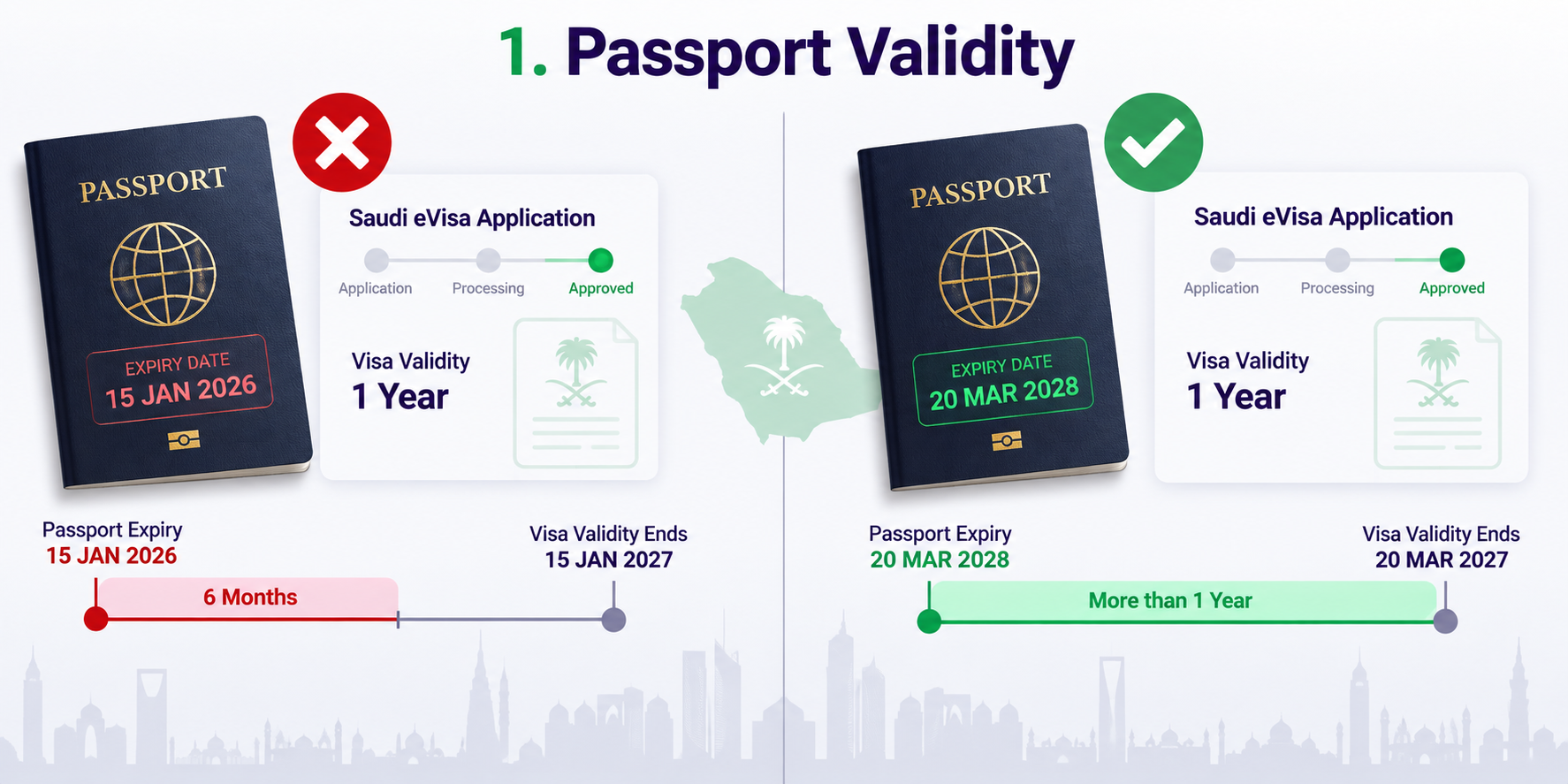
The Saudi eVisa requires your passport to remain valid for a minimum period beyond your visa's issue date — most applicants need at least six months of validity remaining, and some visa categories are stricter. The mistake happens when travelers check the expiry date against their travel dates rather than against the visa's full validity window. A 90-day visa or a one-year multiple-entry visa can outlast a passport that only just clears the minimum on the day you apply, especially if you plan to use the visa for a return trip months later.
The fix: check your passport's expiry date against the visa validity period you're applying for, not just your upcoming trip. If you're applying for the 1 Year Multiple Entry Saudi eVisa, your passport needs to comfortably outlast that full year, not just your first entry. If your passport is close to the line, renew it before you apply rather than after — a mid-validity renewal after the visa is issued can create a mismatch between the visa and your travel document at the border.
2. Entering Your Name in the Wrong Order or Format
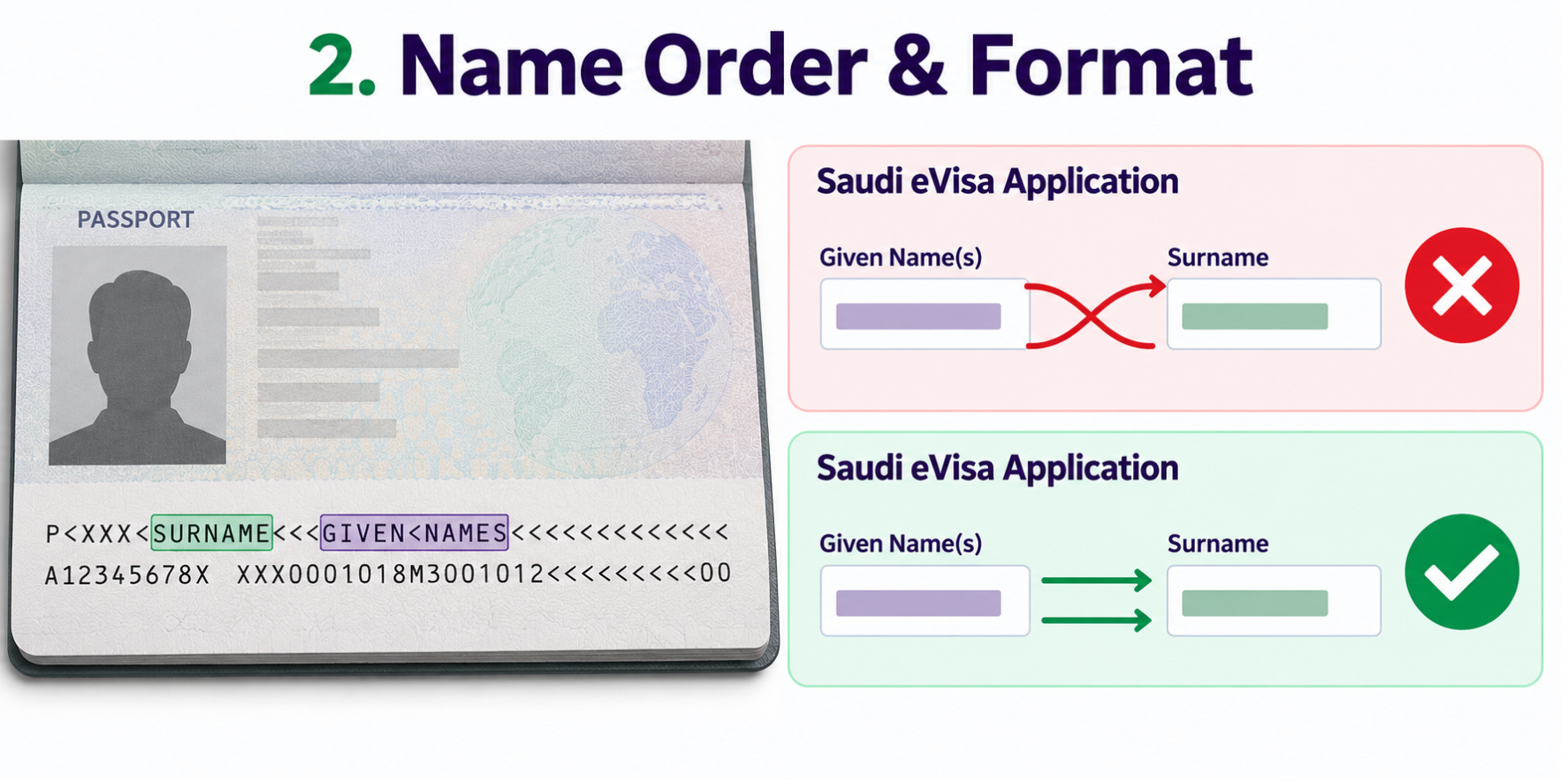
This is one of the most damaging Saudi eVisa Application Mistakes, and it rarely feels like a mistake at the time. Passports from different countries lay out names differently — some show family name first, others show given names first, and some include multiple middle names that don't fit neatly into a two-field form. Applicants often type their name the way they say it out loud, rather than exactly as it's printed in the machine-readable zone of the passport.
The fix: open your passport's photo page and copy the given name and surname fields exactly as they appear in the machine-readable zone at the bottom of the page (the two lines of text with the < symbols), not the stylized version printed above it. If your passport shows a single combined name with no clear split, enter it in the same order as printed and avoid adding or removing initials. If you've already submitted with a name that doesn't match your passport, contact support immediately — a name mismatch is one of the few errors that's genuinely difficult to correct after submission and may require reapplying.
3. Mistyping the Passport Number
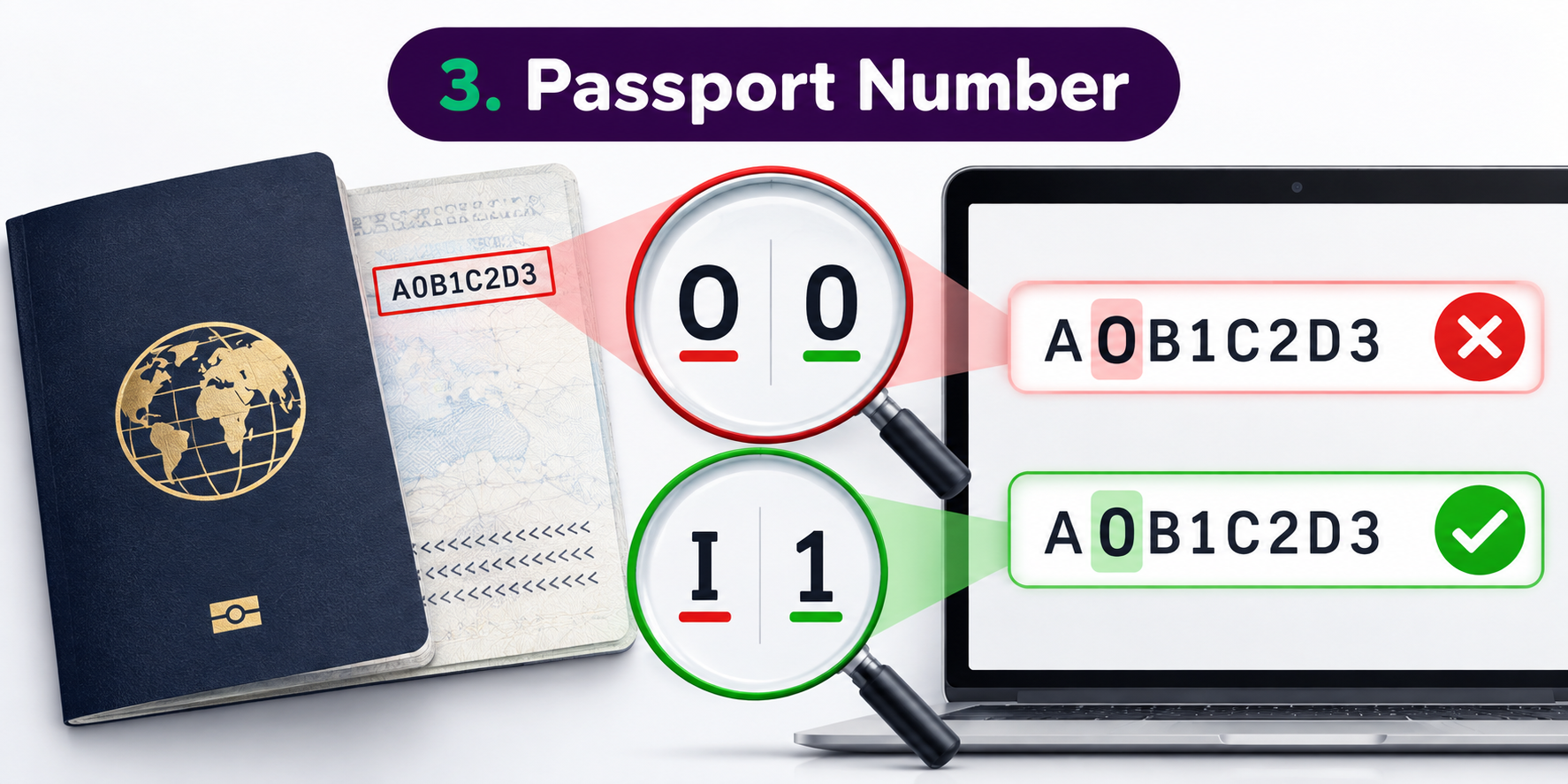
A single transposed digit or a mistaken letter (O instead of 0, I instead of 1) in the passport number field is one of the most frequent — and most consequential — Saudi eVisa Application Mistakes. Because the passport number is the primary identifier linking your visa record to your travel document, an incorrect entry can mean the visa simply doesn't match the passport you present at check-in or on arrival.
The fix: don't type the passport number from memory. Read it directly from the passport's data page character by character, and read it back a second time before moving to the next field. Pay close attention to fonts where 0 and O, or 1 and I, look similar. If you've already submitted and later spot the error, don't wait — reach out through Contact Us as soon as possible, since corrections are far easier before an application has finished processing than after a visa has been issued against the wrong number.
4. Getting the Date of Birth or Nationality Wrong
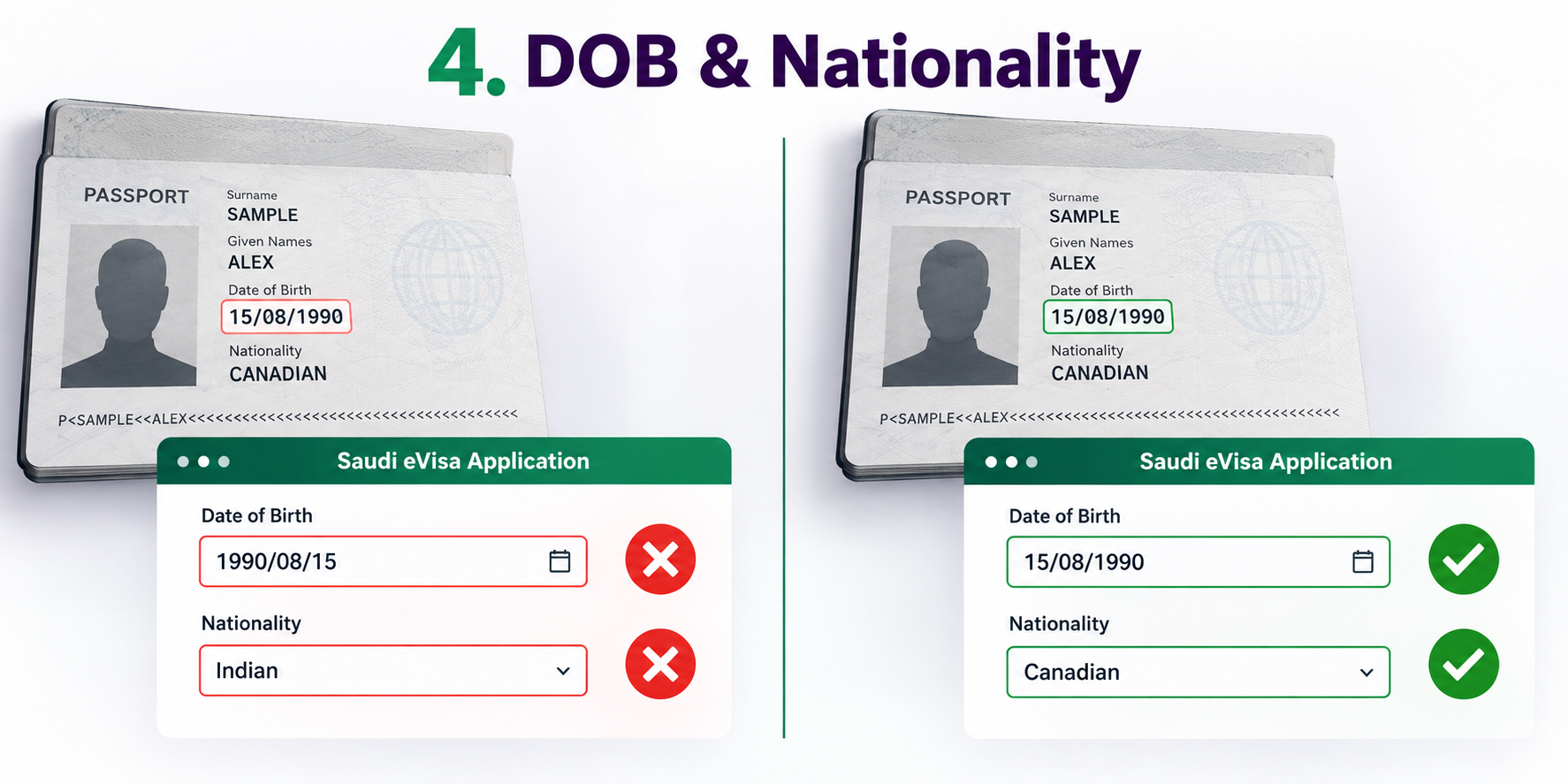
Date format confusion causes more errors than people expect. A passport issued in a country that writes dates as day/month/year can easily be transcribed incorrectly into a form that expects month/day/year, silently swapping the day and month whenever both are 12 or under. Nationality mistakes are less common but still happen, particularly for dual nationals unsure which passport's nationality should be declared, or for travelers who assume "nationality" means country of residence rather than country of citizenship.
The fix: read the date of birth as it's written on the passport photo page, not as you're used to saying it, and confirm the form's expected format before typing. For nationality, always use the nationality shown on the passport you're actually applying and traveling with — if you hold more than one passport, apply using the same document for the entire trip and declare that document's nationality, since mixing passports mid-process is a common source of downstream problems at immigration.
5. Choosing the Wrong Visa Type
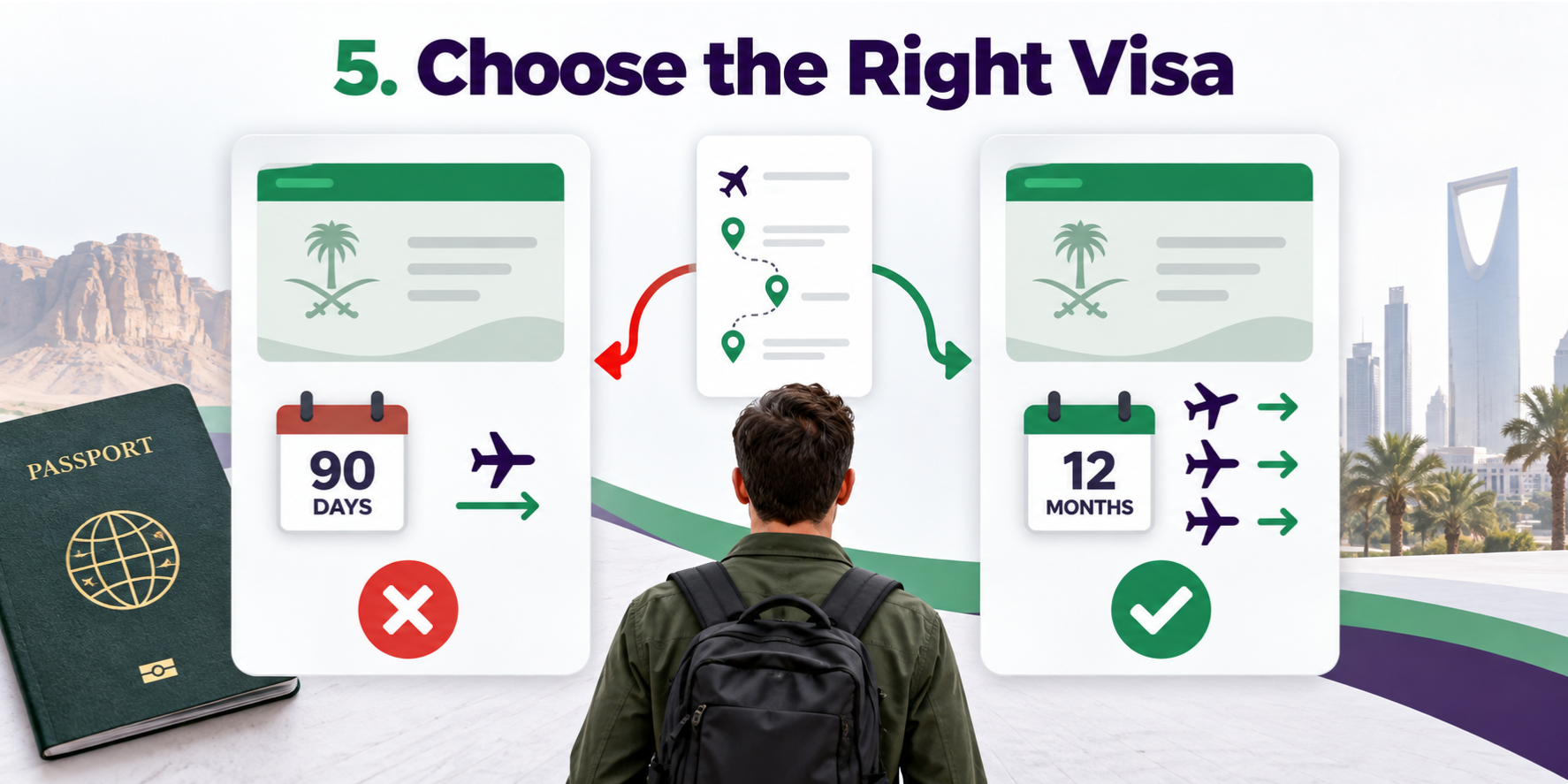
Saudi Arabia offers different eVisa products for different purposes, and it's easy to select the wrong one when the checkout options aren't read carefully. Someone planning a single leisure trip might not need the same visa as someone with three separate visits planned over the coming year, and travelers sometimes select a shorter or longer validity than their actual plans require simply because the options weren't compared side by side. Unlike a photo or a document, this is a choice you make and pay for — undoing it after the fact isn't always straightforward.
The fix: compare your travel plans against the visa options before selecting one. If you expect to enter and exit Saudi Arabia more than once within a year, the 1 Year Multiple Entry Saudi eVisa is generally the better fit; if you have a single trip or a shorter travel window in mind, the 90 Day Multiple Entry Saudi eVisa is usually sufficient and more cost-effective. If you're unsure which applies to your situation, it's worth asking before you pay rather than after.
7 More Mistakes Worth Watching For
These don't tend to cause the same level of damage as the top 5, but they're common enough — and avoidable enough — to run through before you submit.
1. Uploading a Photo That Doesn't Meet Saudi Visa Specifications
Reusing an old passport photo, a cropped selfie, or an ID photo taken for a different country is one of the most avoidable causes of delay. Saudi eVisa photos need a plain light-colored background, a direct neutral-expression shot with no glasses or headwear (except for religious purposes), and must be recent. If a photo is flagged, re-upload a compliant one rather than assuming it will pass on review.
2. Misstating the Purpose of Travel
The tourist eVisa covers leisure travel, visiting family, Umrah outside the dedicated Hajj season, and certain business meetings and events — but applicants sometimes default to "tourism" without checking whether their actual purpose, like attending a conference or a longer business engagement, needs a different declaration. State your purpose accurately, and check the requirements for your specific purpose before submitting if you're unsure.
3. Uploading Blurry, Cropped, or Incomplete Documents
A passport photo taken at an angle, with glare, or missing a corner is a recurring cause of processing delays — the same goes for any supporting document tied to your travel purpose. Scan or photograph documents flat, in good lighting, with every corner and line of text visible, and check the uploaded file is actually legible before moving on.
4. Applying Too Early or Too Late for Travel Dates
Applying too far ahead can mean a visa's validity window starts running before you're ready to travel, wasting part of it; applying too close to departure leaves no buffer for a correction or extra verification. Apply with several days of buffer before travel, and if a visa hasn't come through as your departure nears, check your Saudi Visa Status and reach out for help.
5. Using an Unofficial Portal or Submitting Duplicate Applications
Submitting through more than one website for the same trip — out of uncertainty or as a hedge — creates duplicate records, duplicate payments, and confusion over which visa is valid. Pick one application channel, confirm what's included in the fee upfront, and avoid starting a second application while the first is still processing.
6. A Payment Name That Doesn't Match the Applicant
It's fine for one person to pay for a spouse, parent, or colleague's visa — the mistake is entering the cardholder's name into an applicant field, or mixing up traveler details across a multi-person order. Keep each traveler's application separate and clearly labeled, and always fill applicant fields with the traveler's own details, not the payer's.
7. Not Saving Your Reference Number or Confirmation
Closing the confirmation page or deleting the confirmation email makes it far harder to check status or follow up on a delay later. As soon as you submit, save your application reference number, confirmation email, and payment receipt somewhere you'll find them again — you'll need them to check your Saudi Visa Status or resolve any issue quickly.
A Quick Checklist Before You Click Submit
Most of these mistakes can be caught in the two or three minutes before you submit, if you deliberately pause and review rather than clicking through on autopilot. Before you finalize your application, run through this short list:
- Passport page open next to the form, with every name, number, and date typed from the document itself — not from memory.
- Passport validity checked against the full length of the visa you're buying, not just your travel dates.
- Photo taken within the last six months, plain background, no glasses, no headwear other than for religious reasons.
- Visa type and stated purpose matched to your actual travel plans, not the fastest option on the list.
- Every uploaded document opened back up after uploading to confirm it's legible.
- Applicant fields filled with the traveler's own details, even if someone else is paying.
- Confirmation email and reference number saved somewhere you'll find them again.
Running through this list adds only a few minutes to the process, but it's the difference between an application that clears without incident and one that bounces back with a correction request days later — right when you're trying to finalize flights and hotels.
What to Do If You've Already Made One of These Mistakes
Not every error requires starting over. Simple issues — a rejected photo, a document that didn't scan clearly, an unclear travel purpose — are usually correctable while the application is still being processed. Errors tied to identity fields, such as the passport number, date of birth, or a name that doesn't match the passport exactly, are harder to fix retroactively and sometimes require a fresh application rather than an edit. The earlier you catch and report an error, the more options you generally have, so it's worth reviewing your submitted application against your passport again right after you submit, rather than waiting until a delay forces the issue.
If you're not sure whether something on your application needs fixing, or you want a second pair of eyes on your details before you submit, our visa experts can review your application and flag issues before they turn into delays. You can start your application, check on an existing one, or ask a question through Apply Saudi Visa or Contact Us.


 Share







Pooja is a travel and visa content writer specializing in visa requirements, travel procedures, and immigration information for international destinations. She researches visa rules, documentation, application processes, entry requirements, and travel updates to create clear, practical guides that help travelers understand the visa process and plan their journeys with confidence.