Umrah is open to Muslim travellers from almost anywhere in the world, and for most nationalities it no longer requires a dedicated pilgrimage visa at all. Since Saudi Arabia opened its tourist eVisa to Umrah in 2019, and expanded Nusuk into a direct booking platform in 2025, the process has split into two clear paths: apply online yourself if your passport qualifies, or go through a licensed Umrah operator if it doesn't. Getting this distinction right — and sequencing the visa, the Nusuk registration, and the Umrah permit correctly — is what separates a smooth trip from one held up at the airport or turned away at Masjid al-Haram.
This guide walks through both routes end to end: eligibility, the exact steps, costs, the rules that apply to women and children, and what changes during Ramadan and the Hajj season.
The Two Routes to Perform Umrah
Every international pilgrim falls into one of two categories.
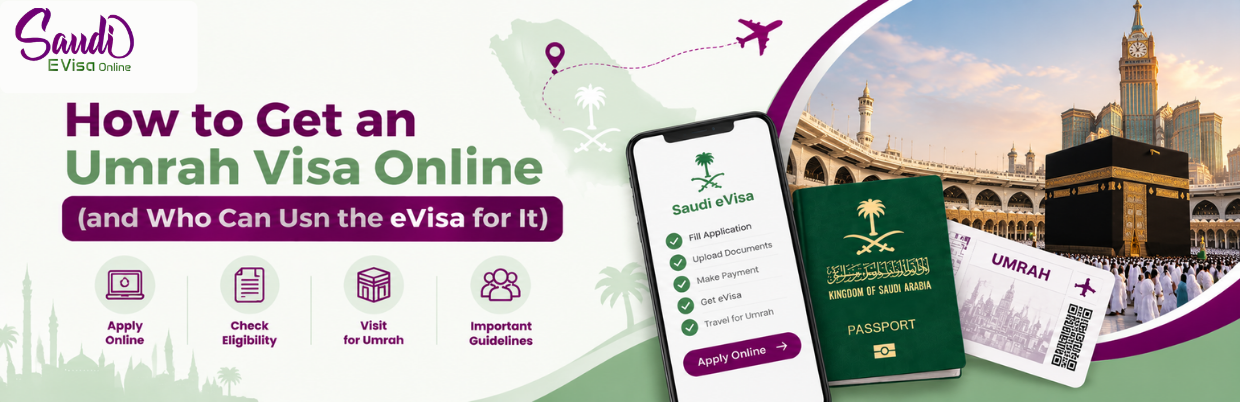
Route 1 — Tourist eVisa + Nusuk. If your passport is on Saudi Arabia's eVisa-eligible list, you apply online at the official Saudi eVisa portal, receive your visa (typically within minutes to a few days), then register on Nusuk to book your Umrah and Rawdah permits before you travel.
Route 2 — Approved Umrah visa through a licensed provider. If your passport isn't eVisa-eligible, you apply through a Ministry of Hajj and Umrah–licensed operator, who handles the visa alongside your Nusuk booking, hotel, and transport package.
| Traveller Profile | Route | Typical Validity |
|---|
| eVisa-eligible nationality | Tourist eVisa + Nusuk permit | 1 year, multiple entry, 90 days per visit |
| Eligible UK passport | Tourist eVisa or Saudi ETA + Nusuk | 1 year (eVisa) / similar terms (ETA) |
| GCC resident (non-GCC national) | GCC-resident eVisa + Nusuk | 1 year, multiple entry |
| Passport not eVisa-eligible | Dedicated Umrah visa via licensed operator + Nusuk | Single entry, ~30 days from entry |
| GCC citizen | No visa required | N/A |
Both routes end at the same place: you cannot enter Masjid al-Haram without an active Umrah permit issued through Nusuk, regardless of which visa got you into the country.
Who Can Use the Tourist eVisa for Umrah
Saudi Arabia's tourist eVisa covers dozens of nationalities — including the UK, most of the EU, the US, Canada, Australia, New Zealand, and a growing list of Asian countries such as Malaysia, Singapore, Japan, and South Korea. The eVisa explicitly permits "Umrah (excluding Hajj)" as one of its allowed activities, alongside tourism, events, and family visits — it just doesn't allow employment or study.
Because the eligible-country list is periodically revised, and because your specific passport, residency status, or a Schengen/UK/US visa you already hold can each open the eVisa route even outside the base list, always verify current eligibility against the official portal (or your visa provider's live checker) before booking flights. Treat any list you see in an article — including this one — as a starting point, not a guarantee.
eVisa vs. Dedicated Umrah Visa Online: Key Differences
| | Tourist eVisa | Dedicated Umrah Visa |
|---|
| Who it's for | Eligible passport holders | Non-eligible passport holders, via licensed agent |
| Entry type | Multiple entry | Usually single entry |
| Stay per visit | Up to 90 days | Around 30 days from entry |
| Validity | 1 year from issue | 90 days from issue to travel |
| Movement in-country | Free travel across Saudi Arabia | Traditionally limited toward the Holy Cities, though this has eased |
| Booking channel | Official eVisa portal, then Nusuk | Licensed Umrah operator, bundled with Nusuk booking |
| Can also be used for | Tourism, events, family visits | Umrah-focused travel only |
The eVisa is the more flexible document by a wide margin. If your passport qualifies, there's rarely a reason to route through an agent for the visa itself — though many travellers still use an agent for the flight, hotel, and Ziyarat (guided site-visit) package.
Step by Step: eVisa, Then Nusuk Permit
Step 1 — Confirm your passport's eligibility. Check the official Saudi eVisa Online portal or your provider's checker tool before doing anything else.
Step 2 — Apply for the tourist eVisa. Submit your passport details, a digital photo, and travel information online. Processing is usually fast, often same-day, though it's worth applying at least a week before travel to leave room for any document queries.
Step 3 — Create your Nusuk account. Register on the official Nusuk platform using your nationality, country of residence, and passport details. This is separate from your visa application — holding a valid eVisa does not automatically create a Nusuk profile.
Step 4 — Book your Umrah permit. Nusuk requires an approved time-slot permit before you can enter Masjid al-Haram. Since 2025, Nusuk Umrah also lets eligible travellers book accommodation, transport, and the visa itself in one flow, cutting out the need for a separate agent for straightforward trips.
Step 5 — Book your Rawdah permit separately (Madinah). If your itinerary includes Madinah, the Rawdah — the area between the Prophet's tomb and pulpit in Masjid an-Nabawi — requires its own timed permit, booked through the same Nusuk app. These slots are short (roughly 15–30 minutes) and fill quickly, so book as soon as your Madinah dates are confirmed.
Step 6 — Travel and complete Umrah. Enter Ihram at the designated Miqat point before reaching the boundary of the Haram area, then proceed to Masjid al-Haram with your Nusuk QR code to perform Tawaf, pray at Maqam Ibrahim, and complete Sa'i between Safa and Marwa.
Documents You'll Need
- Passport valid for at least six months beyond your planned entry date
- A recent digital passport-style photo
- Confirmed return or onward flight details
- Proof of accommodation in Makkah (and Madinah, if applicable)
- International Certificate of Vaccination showing the Meningococcal Meningitis (ACWY) vaccine, administered at least 10 days before arrival — mandatory for all Umrah and Hajj travellers
- Any additional vaccination requirements published by the Saudi Ministry of Health closer to your travel date, which can be updated seasonally
- For the dedicated Umrah visa route: your operator will typically also require a same-sex mahram or group-travel confirmation only where their local licensing rules still require it (see the women's section below)
Umrah Visa Online Price and Fees
Costs vary by route:
- eVisa route: a government visa fee plus mandatory travel health insurance, paid online at the point of application. Processing is fast — often within minutes to a couple of days.
- Dedicated Umrah visa route: fees are typically bundled into a package price with your licensed operator, since the visa is issued alongside a Nusuk-registered accommodation and transport plan. Processing usually takes several business days rather than minutes.
Because government fees and insurance charges are adjusted periodically, quote the current fee shown at the point of application rather than a fixed number in marketing copy — a hard number here is one of the fastest ways an article goes stale and starts contradicting your own checkout page.
Umrah From Europe
Ireland
Irish passport holders should first confirm eligibility for the Saudi tourist eVisa. If eligible, the process is straightforward: apply online, receive the eVisa, then register on Nusuk to secure the Umrah (and, if relevant, Rawdah) permit before travelling. Irish travellers heading out during Ramadan or in the weeks before the Hajj season should apply and book Nusuk slots earlier than usual, since both periods see a sharp rise in demand.
Denmark
Danish nationals eligible for the tourist eVisa can plan Umrah as part of a wider Saudi Arabia trip — the eVisa's multi-entry, 90-day terms make it easy to combine Umrah with other travel within the same visa. After entry, the same Nusuk registration and permit process applies as for any other eVisa holder.
Spain
Spanish passport holders who meet the tourist eVisa requirements can typically arrange the entire trip online without an agent. As with other eVisa nationalities, the visa itself doesn't authorise Hajj, and Makkah access can be subject to additional restrictions in the run-up to and during the Hajj season — worth checking regardless of how far in advance you've booked.
UK — eVisa or ETA
British passport holders have two potential routes: the standard tourist eVisa, or the newer Saudi ETA where applicable. Both permit Umrah but not Hajj or employment, and both still require the separate Nusuk registration and permit before entering Masjid al-Haram. Check current guidance on which route applies to your specific circumstances, since ETA and eVisa eligibility rules for UK travellers have moved more than once.
Umrah From Singapore, Malaysia, Turkey and Central Asia
Travellers from Singapore, Malaysia, Turkey, and several Central Asian countries generally qualify for the Saudi tourist eVisa, making the online route the default for most pilgrims from this region. As always, confirm your specific passport's current status before booking, then follow the standard eVisa-plus-Nusuk sequence above. The official Nusuk platform maintains an up-to-date list of countries it serves directly, along with available packages for those routing through Nusuk Umrah rather than a separate agent.
Umrah From South Africa
South African passport holders should verify current Saudi eVisa eligibility before making arrangements, since this has been a nationality where rules have shifted over time. If eligible, the standard eVisa-plus-Nusuk process applies. If not — or if your circumstances call for a different route — use a Ministry of Hajj and Umrah–licensed Umrah operator rather than an unofficial agent, both for reliability and because unlicensed agents are a common source of rejected applications and Nusuk booking problems.
If Your Passport Isn't eVisa-Eligible
Passports from countries including Pakistan, India, Bangladesh, Indonesia, and Egypt, among others, currently sit outside the standard tourist eVisa list depending on prevailing rules. Travellers from these countries apply through an approved Umrah service provider licensed by the Saudi Ministry of Hajj and Umrah. These operators submit the visa application together with a verified Nusuk booking — accommodation, transport, and the Umrah permit — as a single package, and can be found through the Nusuk service-provider directory. Avoid agents who aren't listed there; unlicensed operators are the leading cause of both visa fraud complaints and stranded pilgrims in this segment.
Rules for Women
The mahram (male guardian) requirement for Umrah has been progressively relaxed since 2019 and, as of the current Ministry of Hajj and Umrah position, women can obtain an Umrah visa online and travel independently without a mahram, regardless of age. This is a change to a Saudi government travel regulation specifically for Umrah — it does not apply to Hajj, where separate rules exist, and it does not settle the religious question of whether travelling without a mahram is permissible under a given school of Islamic jurisprudence. Women planning to travel alone may want to consult a scholar they trust on the religious question separately from confirming the administrative rule.
In practice, some travel agents or embassies in specific countries may still apply older, more conservative interpretations locally, so it's worth confirming directly with whichever route you're using — the official eVisa/Nusuk process or a specific licensed operator — rather than assuming the national-level rule automatically applies everywhere it's booked.
Rules for Children
Children can perform Umrah, but each child typically needs their own valid travel document and, depending on the visa route, their own visa or to be included correctly on a parent's application. Requirements around accompanying documentation (birth certificates, parental consent letters for children travelling with one parent, etc.) vary by nationality and by whether you're using the eVisa or an agent-led Umrah visa, so confirm the specific document list for your country and route before booking.
Umrah During Ramadan
Ramadan is the single highest-demand period for Umrah, with millions of pilgrims travelling to Makkah during the month. Visa processing, hotel availability, and — critically — Nusuk permit slots all tighten considerably as the month approaches. If you're planning Umrah during Ramadan:
- Apply for your visa well ahead of the month, not once it has started
- Register on Nusuk and try to secure your Umrah and Rawdah slots as early as the platform allows
- Book accommodation in Makkah and Madinah early, since prices and availability move fastest in the final weeks before Ramadan begins
- Expect tighter enforcement of Nusuk permit checks at Masjid al-Haram entry points during this period, given crowd volumes
Ramadan 2027 is currently expected to begin in early-to-mid February 2027, though the exact date depends on moon sighting and will only be confirmed shortly beforehand — plan your Nusuk registration timeline around the expected date rather than waiting for final confirmation.
The Hajj-Season Blackout
Umrah visas and permits are suspended during the Hajj period each year so that Saudi authorities can dedicate capacity, security, and logistics to Hajj pilgrims. In recent seasons, this has meant:
- A final date each year for entering Saudi Arabia on an Umrah visa before the blackout begins
- A final departure date for anyone already in the country on an Umrah visa
- Umrah visa issuance and Nusuk Umrah permits resuming only after Hajj concludes, typically a couple of weeks later
Entering or remaining in Makkah without the correct permit during this window is treated as a serious violation with real penalties — not a grey area worth testing. Hajj 2027 (1448 AH) is currently expected around mid-May 2027 based on preliminary calculations, with the exact dates confirmed closer to the time. If your Umrah trip falls anywhere near that window, check the official Hajj-season calendar before booking flights, since the blackout dates are published by the Ministry of Hajj and Umrah each year and shift with the lunar calendar.
Not the Same as Hajj
Umrah and Hajj are separate pilgrimages with different visa requirements — a tourist or Umrah visa cannot be used for Hajj, and additional restrictions apply to Makkah during the Hajj season. See our full comparison of Umrah Visa vs Hajj Visa for how the visas, dates, and rules differ.
Common Mistakes That Delay or Reject Applications
- Applying for the eVisa without first confirming current nationality eligibility, rather than relying on an outdated list
- Treating the visa and the Nusuk Umrah permit as the same thing — you need both
- Booking Madinah accommodation without securing a Rawdah slot in time
- Assuming a 90-day eVisa validity guarantees Umrah access throughout that window, when the Hajj-season blackout can cut across it
- Using an unlicensed agent for the non-eVisa Umrah visa route, which risks both fraud and Nusuk booking mismatches
- Travelling without the mandatory Meningitis ACWY vaccination certificate


 Share






Pooja is a travel and visa content writer specializing in visa requirements, travel procedures, and immigration information for international destinations. She researches visa rules, documentation, application processes, entry requirements, and travel updates to create clear, practical guides that help travelers understand the visa process and plan their journeys with confidence.